
Tim Montgomerie is a British political commentator, columnist and campaign strategist who remains a recognisable voice in UK public debate in 2026. Born on 24 July 1970, he is 55 years old and is best known for building influential centre-right platforms rather than serving as an elected politician. His career has stretched from policy work and speechwriting to broadcasting, digital publishing and high-profile media debate, which is why his name still carries weight in Westminster and beyond.
box.
| Detail | Information |
|---|---|
| Full name | Timothy Montgomerie |
| Age in 2026 | 55 |
| Birth date | 24 July 1970 |
| Birthplace | Barnstaple, Devon, England |
| Education | University of Exeter |
| Known for | Centre for Social Justice, ConservativeHome, UnHerd, commentary |
| Current alignment | Reform UK supporter/member in recent reporting |
| X handle | @montie |
| X audience | About 191,290 followers |
| 500+ connections; senior adviser role highlighted | |
| Estimated net worth | Around $1 million to $3 million |
Early life and Background
Timothy Montgomerie was born in Barnstaple, Devon, and grew up in an army family. Public biographical profiles place his childhood across Devon, Hampshire, Northern Ireland and Germany, giving him a broader geographical background than many Westminster figures. He later studied Economics and Geography at the University of Exeter, where he built friendships and networks that would matter in British politics for years afterward. That early mix of provincial roots, military-family mobility and academic grounding shaped much of his later public life.
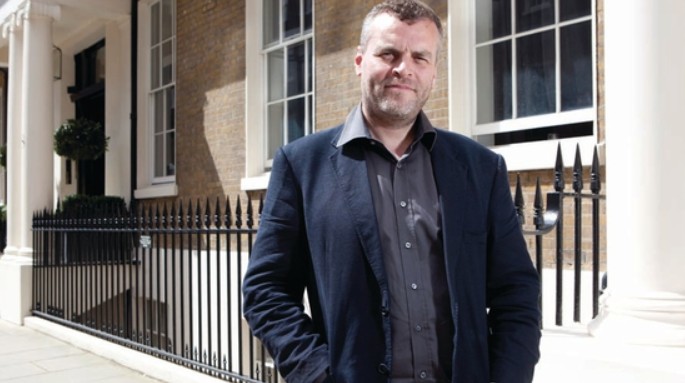
Tim Montgomerie Career
His professional story is unusual because it moves through party politics, think tanks, newspapers, online media and television. He worked early in his career at the Bank of England, then became more prominent as a strategist and writer around the British right. The result is a portfolio career built on ideas, campaigning and commentary rather than ministerial office. That is a key reason Montgomerie is often described as influential even when he is outside formal power.
Conservative Party Central Office
From 1998 to 2003, he worked for the Conservative Party as a speechwriter to William Hague and then Iain Duncan Smith. He later became chief of staff to Duncan Smith, a role that gave him serious exposure to leadership politics and policy messaging. In this period, Montgomerie wrote and argued for a more socially engaged approach on the right, helping to popularise the language of compassionate reform inside the party leader’s circle.
Centre for Social Justice
In 2004, with Iain Duncan Smith and Philippa Stroud, he co-founded the Centre for Social Justice. The think tank became one of the most important institutions associated with center-right social reform in modern British politics. Duncan Smith’s anti-poverty agenda and welfare arguments gave the project national relevance, and it helped establish Montgomerie as more than a campaign insider. It also strengthened his reputation for political analysis rather than simple partisan messaging.
In 2005, he launched ConservativeHome, a site that quickly became essential reading for activists, MPs and journalists tracking the right. Conservative Home Montgomerie became a familiar pairing in Westminster because the site gave grassroots members a louder voice and regularly challenged the leadership from its own side.
Since 2010
After 2010, his profile stayed high even as his roles changed. He published the report “Falling Short” after the general election, later joined The Times, and in 2014 Montgomerie resigned as comment editor after a short spell in that senior newsroom role. In 2016 he left the conservative party over Europe, making Brexit a defining break point in his public positioning. He briefly returned to government as a Boris Johnson adviser in 2019 and, by December 2024, switched from decades of Tory activism to Reform UK. By late 2025 he was also being presented in public reporting as Honorary President of Reform’s Christian Fellowship.
Personal and Public Appearance
Tim Montgomerie private profile has always been much quieter than his public work. Reliable public biographies confirm his birth details, religious outlook and family background, but he has generally kept relationships, children, property and lifestyle matters out of regular media exposure. A 2019 profile described him as single and without children at that stage of life, while later coverage still focused far more on belief, faith and work than on celebrity-style domestic detail. Publicly available records also place him in Salisbury on LinkedIn in recent years.
Conclusion
Tim Montgomerie remains a distinctive figure in British public life because his influence has never depended on becoming a party leader. Instead, Montgomerie Tim built authority through ideas, commentary and institution-building, from Steerpike-era connections to the wider Spectator world. His reputation also reflects how he moved between digital media, think tanks and mainstream debate without losing relevance. Whether readers know him through a book, a magazine column or television appearances, his profile still attracts attention in 2026. For anyone following modern conservative politics and media, Tim Montgomerie stands out as a commentator whose voice continues to shape discussion.